ROCK. BLUES. COLORADO.
How to Plan a Colorado Music Trip Around the Shows You Actually Want
A Colorado music trip works better with one show you care about at its center than with a crowded list of famous rooms. Start with the performance, then build the journey around its actual date, location and entry conditions. Leave room to discover an opening act without turning every evening into a race across town.
This guide is a planning method, not a list of announced festivals. It links to calendars that can be checked for your own dates, so an old festival poster or an expired event listing does not become the foundation of a new trip.
Choose an anchor show from an official calendar
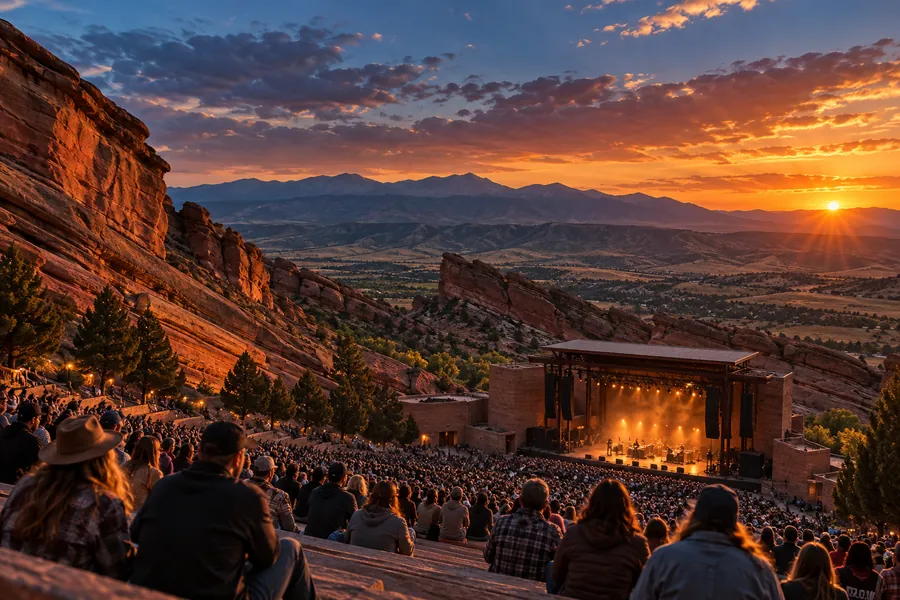
For a Denver club night, start with the venue calendars behind our small venues guide. The Larimer Lounge calendar is one direct source. For a larger outdoor show, use the official Red Rocks event calendar. Look at the individual event page rather than stopping at a search result or a social-media image.
Copy the date, venue address, doors time, show time, age restriction and ticket link into a single note. Mark a field “not stated” if the organizer has not supplied it. Doors time is not a promise about when a particular performer will appear; a festival’s overall opening time is not an individual set time either.
Listen before adding a second night
Listen to a recent performance by the headliner and at least one opener. A studio track can tell you whether you like the songs, while a live recording offers a different clue about the set’s pace and instrumentation. Use our guide to live music videos to think about what a recording does and does not reveal.
Choose a second show for a reason: a different style, a smaller room or a local band you want to hear. Booking two overlapping sets on opposite sides of the city usually reduces the time available for either. A free afternoon is also useful space for a changed arrival time or an unplanned rest.
Plan the return journey before the outward one
For trips served by Denver public transportation, consult RTD’s routes and services for the actual day and time. Check the final useful departure and any service alerts. A stop near the venue does not establish that the route will still run when the show ends.
For any shuttle or other booked transport, record the pickup point, departure policy and a contact method. Do not assume an urban transit route serves an out-of-town venue. Our Red Rocks planning guide is a separate starting point for that setting; use the venue’s current instructions to settle event-specific details.
Use a one-page show worksheet
Keep one entry per night. The point is to reveal unanswered questions while there is still time to resolve them, not to produce a beautiful itinerary.
- Music: artist, supporting acts and one listening link.
- Entry: official event page, date, doors, show time and age rule.
- Location: full address and the correct entrance or meeting point.
- Journey: outbound route, return route and a backup plan.
- Budget: ticket checkout total, transport, food and an optional merchandise amount.
- Needs: accessibility arrangements to confirm, permitted bag and weather-appropriate clothing.
- Last checked: the date you verified the information.
If three fields depend on assumptions, resolve those before adding another show. Compare total evening costs rather than ticket prices alone.
Recheck the plan close to departure
Open the official event page again for changes, then check your transport and ticket access. Read the venue’s current entry and accessibility information; neighboring venues can have different rules. Save essential details somewhere you can reach without hunting through messages at the door.
Finally, leave a little time after the trip for a short listening note: which opener stood out, which song you want to find and which room you would revisit. That turns a successful weekend into a better starting point for the next one, without claiming there is one ideal itinerary for every music fan.