ROCK. BLUES. COLORADO.
A Simple Stage Plot and Input List for a Small Band
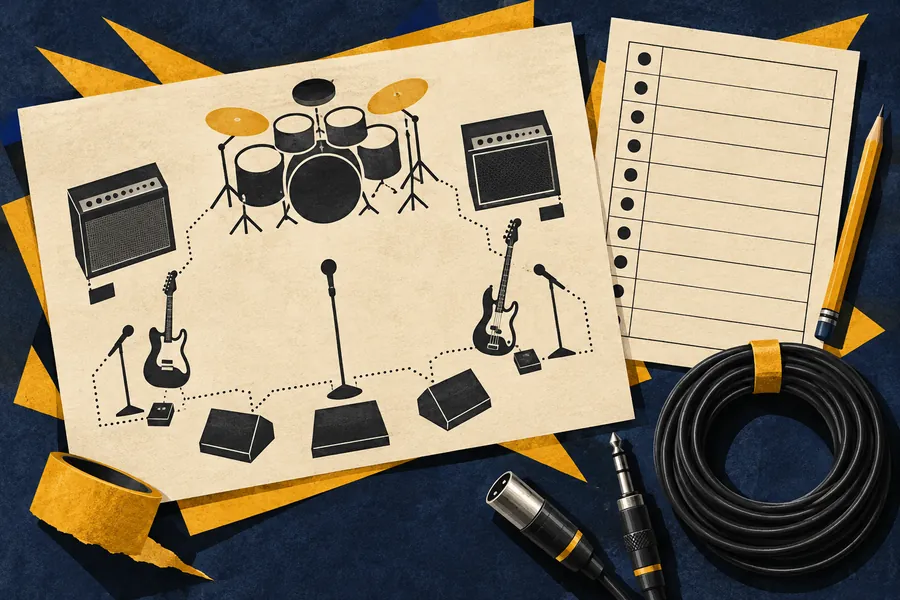
A stage plot tells the crew where the band and equipment will be. An input list tells them which sound sources need a connection. The two documents answer different questions, but they should describe the same show. A simple, current drawing is more useful than a polished file left over from a different lineup.
For a small band, start with one readable page or a two-page PDF. Put the band name, performance date, revision date and one production contact at the top. The goal is to let the venue identify open questions before load-in.
Draw the view and label its orientation
Use a top-down drawing with the audience edge clearly marked. Show each performer, their instrument, amplifiers, microphone positions and monitor locations. Yamaha’s soundcheck preparation guide recommends matching the microphone and DI numbers in the drawing to the input list.
Names alone can be ambiguous to someone who has never met the group. “Alex — guitar and vocal” is clearer than “Alex,” and numbered monitor labels are easier to refer to than “the one near the amp.” Use plain shapes and legible text. The drawing does not need realistic instrument artwork.
List connections, not just musicians
A performer may need more than one input. A singing guitarist can require a vocal microphone and an amplifier microphone; a stereo keyboard setup can require two audio channels. Conversely, not every item drawn on the stage needs a separate connection to the house system.
List each requested source with its connection, location and who supplies the relevant equipment. Treat your numbering as a proposed reference: the venue engineer may use a different console patch. Agree on changes and update both documents rather than insisting that a worksheet determines the house’s wiring.
Start with an example, then adapt it
The following fictional eight-input plan represents one possible compact setup. It is not a universal specification for drums or a requirement imposed on any venue. Confirm what the room and show actually need.
| Reference | Source | Connection and note |
|---|---|---|
| 1 | Kick drum | Microphone; venue provision to confirm |
| 2 | Snare drum | Microphone; venue provision to confirm |
| 3 | Drum overhead | Single microphone; arrangement to confirm |
| 4 | Bass | DI; band or venue provision to confirm |
| 5 | Guitar amplifier | Microphone; amplifier supplied by band |
| 6 | Keyboard | Mono DI; keyboard output compatibility to confirm |
| 7 | Lead vocal | Microphone and stand; downstage position |
| 8 | Backing vocal | Microphone and stand; keyboard position |
Add or remove rows for the actual arrangement. If the keyboard performance depends on stereo effects, discuss that requirement instead of copying the mono example. Specify any necessary power or connection requirements from the equipment documentation; do not guess them from this table.
Separate monitor needs from the input list
Use a small section for who needs each monitor mix and the most important sources in it. Yamaha’s band PA guide distinguishes the monitor balance from the audience balance. Confirm how many independent mixes the venue can provide before designing a show around more than it has.
Also state whether the band brings in-ear equipment, floor monitors, microphones or DIs. “We bring our own gear” is too vague to settle which cables, stands and connections remain the venue’s responsibility. Keep requests practical and identify genuinely essential requirements separately from preferences.
Advance the document and check the revision
Send the file through the agreed production contact and ask about unresolved items. Include the set length and changeover arrangement if they are not already settled in the booking pack. Replace the old file when the lineup changes, and make the revision date visible.
Before leaving for the show, compare the document with what is actually packed. Confirm the correct file reached the crew, bring an accessible copy and be ready to explain changes in a sentence. Then use the soundcheck worksheet to test the performance itself. Clear paperwork earns its value when it removes a question from a busy stage, not when it makes a simple setup look complicated.